

Last Updated: November 12, 2026
Quick Summary
Choose bulk workwear suppliers for warehouses by scoring them on five criteria: EN ISO 20471 certification, a full sizing range, genuine volume pricing, reliable lead times and a single account covering every shift. Consolidating hi-vis, gloves and cold-store layers with one supplier cuts admin and keeps compliant kit on the floor.
- Class 2 hi-vis is the usual minimum for warehouse floors with moving vehicles; Class 3 suits loading bays and low-light work.
- Our Beeswift Essential Bulk Buy Hi-Vis Vest pack of 100 costs £176.49, roughly £1.76 per vest.
- Bulk pricing steps down at pack, pallet and contract level, so size orders to hit the next break.
- Calculate cost per wear as garment price divided by expected wears, plus replacement cost divided by expected wears.
- Start your first order with the highest-turnover items: hi-vis vests and gloves, then add role-specific garments.
Table of Contents
- What Warehouse Managers Need From Bulk Workwear Suppliers
- Wholesale Workwear vs Bulk Buying: What the Difference Means for Your Order
- Warehouse Hi-Vis Clothing That Meets EN ISO 20471
- Building a Warehouse PPE Kit That Covers Every Shift
- Personalised Workwear in Bulk: Embroidery, Printing and Lead Times
- Volume Pricing and Lifecycle Cost: What Bulk Workwear Really Costs
- A Compliance Checklist for Warehouse Managers
- Setting Up a Workwear Account and Placing Your First Bulk Order
- Frequently Asked Questions
What Warehouse Managers Need From Bulk Workwear Suppliers
Choosing bulk workwear suppliers for warehouses comes down to five buying criteria: certified safety compliance, consistent sizing across the range, genuine volume pricing, reliable lead times, and a single account that covers every shift. Many warehouse managers juggle hi-vis, cold-store layers and hygiene coats from several different sellers, then lose time chasing replacements when one runs dry.
The problem is rarely product quality, it is fragmentation. One supplier for vests, another for trousers, a third for gloves, and nobody tracking what has been issued to whom.
Below, we break down exactly how to buy bulk workwear for a warehouse, from certification to cost per wear.
The Five Buying Criteria That Decide a Contract
Every serious bulk workwear decision rests on five tests. Score each supplier against them before you commit.
| Criterion | What to Check | Why It Matters |
|---|---|---|
| Certification | EN ISO 20471 class on hi-vis garments | Non-compliant kit fails inspection |
| Sizing range | Full size run in every colour | New starters get kit on day one |
| Volume pricing | Price breaks at pack and pallet level | Cost per wear drops sharply |
| Lead time | Stocked lines vs made-to-order | Downtime on essentials is costly |
| Account terms | Credit account and spend visibility | Controls maverick purchasing |
Certification is a sensible first check, since the class marking determines whether a garment suits the site's visibility requirements.
Wholesale Workwear vs Bulk Buying: What the Difference Means for Your Order
Wholesale workwear is buying at trade price through a supplier account, while bulk buying is simply purchasing large quantities at once.
A one-off bulk order suits a seasonal peak or a single new contract.
A wholesale account can suit sites with ongoing demand: a standing price, a purchase history and a single invoice are easier to reconcile than scattered marketplace orders.
Warehouse Hi-Vis Clothing That Meets EN ISO 20471
Hi-visibility clothing for warehouses must meet EN ISO 20471, which grades reflective garments by class according to the visibility risk of the working environment. Class 2 is the usual minimum for warehouse floors with moving vehicles, while Class 3 suits higher-risk or low-light loading areas.

Matching the Garment Class to the Task
Most warehouse sites settle on a simple matrix rather than one class for everyone:
| Area or role | Typical minimum | Why |
|---|---|---|
| Picking aisles with pedestrian traffic only | Class 2 vest | Adequate conspicuity at low vehicle speeds |
| Floors shared with forklifts or reach trucks | Class 2 vest or Class 2 long-sleeve | Arms visible when reaching or signalling |
| Loading bays, yard work, low-light shifts | Class 3 jacket or Class 3 suit | Full torso and arm coverage in poor light |
| Cold stores and freezer rooms | Class 3 with thermal layering | Visibility plus insulation without bulk |
A common pattern is to issue Class 2 vests as the baseline and hold a stock of Class 3 jackets for yard and bay work, light, breathable everyday kit with higher-risk tasks covered.
Dual Certification: EN ISO 20471 Plus EN 343
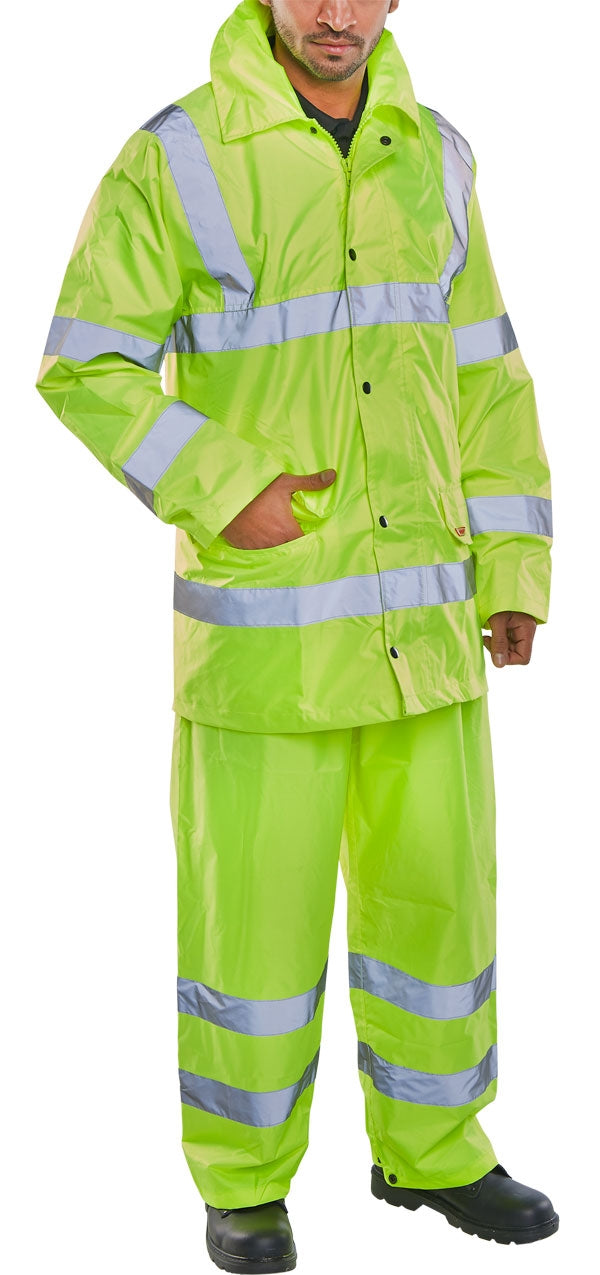
For wet or outdoor loading bays, visibility alone is not enough. Look for garments carrying EN 343 (rain protection) alongside the EN ISO 20471 class marking. Our Hi-Visibility Lightweight Suit Jacket & Trouser Yellow adds EN343 water penetration resistance to Class 3 visibility on the jacket. A Class 3 jacket without EN 343 keeps operatives visible but not dry, and a soaked operative is a cold operative by mid-shift.
The Washing and Retirement Regime
Hi-vis performance can degrade with washing and UV exposure, so garments should be maintained in good condition. In practice, that means a written retirement rule rather than a judgement call on the floor:
- Wash according to the garment label, typically 40°C or 60°C domestic or industrial wash, depending on the certified cycle.
- Inspect reflective tape each issue for cracking, dulling, peeling or contamination with oil and paint.
- Retire any garment where the fluorescent background has faded noticeably or the tape no longer reflects under a torch.
- Log retirement dates so you can see how long a batch actually lasts and adjust your par stock accordingly.
A faded or cracked vest may not meet the standard it was certified to when new, so building replacement into par stock is sensible.
A Practical Starting Point
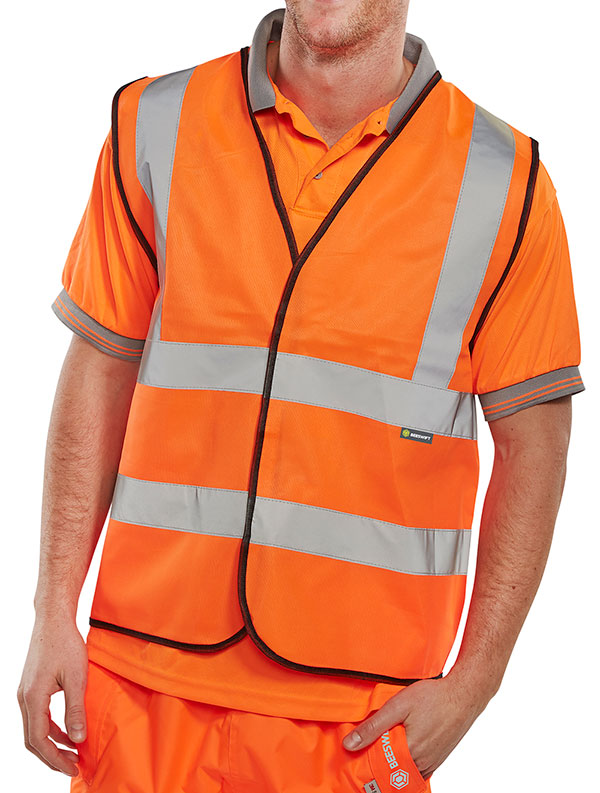
Our Beeswift Essential Bulk Buy Hi-Vis Vest (Pack of 100) is a practical starting point: 100% polyester, hook and loop fastening, retro-reflective tape, two body bands and two braces, EN ISO 20471 Class 2 certified. At £176.49 per pack of 100, that is roughly £1.76 per vest. For 40 operatives on a two-vest rotation, one pack covers initial issue and the first replacement cycle.
Building a Warehouse PPE Kit That Covers Every Shift
A complete warehouse PPE kit covers four zones: high-visibility outer layers, protective gloves, safety footwear and task-specific garments such as hygiene coats. Building it as a single kit per operative removes the guesswork from issuing and reordering.
Gloves are the item managers underestimate. Warehouse handling tears through gloves quickly, so buy in bulk and keep a par stock on site.
Layering for Cold Stores and Loading Bays
Cold-store and chilled work needs a base layer plus an outer layer, not one thick coat.
For the cold-store kit, pair thermal long john trousers as the base layer with an extreme cold condition freezer hood for head protection, and add cold store mechanics gloves so operatives keep dexterity in sub-zero conditions.
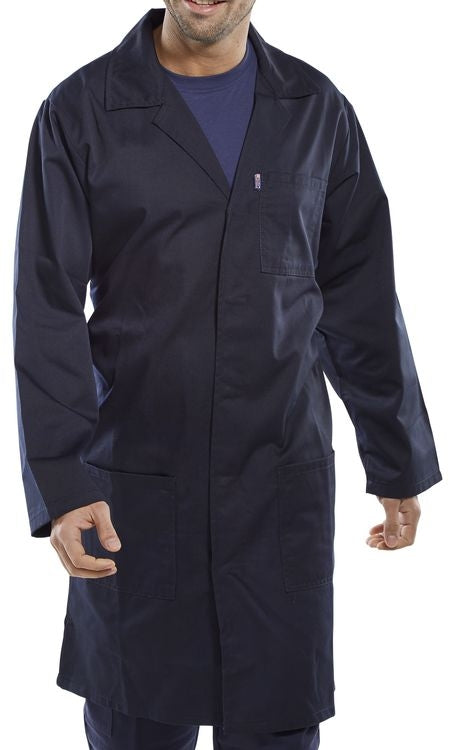
For general warehouse work, a poly cotton warehouse coat or a hygiene coat in navy or royal blue covers the light-protection and cleanliness roles. Our Warehouse Hygiene Coat Navy is 65% polyester and 35% cotton with a concealed stud front and rear vents, priced at £16.00.
Personalised Workwear in Bulk: Embroidery, Printing and Lead Times
Personalised workwear in bulk means adding your company logo, site name or role identifiers through embroidery or printing before garments are issued.
Volume Pricing and Lifecycle Cost: What Bulk Workwear Really Costs
The cheapest garment is rarely the lowest-cost garment. Lifecycle cost looks at price, replacement frequency and washing durability together, and usually favours the better-made item bought in volume. The trap is comparing a marketplace single-unit price against a wholesale pack price and concluding the marketplace is cheaper, when the pack price already includes the volume break and the account includes the replacement history you need to forecast next year's spend.
How Volume Price Breaks Actually Work
Bulk workwear pricing usually steps down at three thresholds, and knowing them lets you size an order to hit the next break rather than land just under it:
| Break level | Typical trigger | What changes |
|---|---|---|
| Pack price | A sealed pack (often 10, 50 or 100 units) | Lower unit price than singles |
| Pallet or carton price | Multiple packs on one line | Further discount and one delivery charge |
| Contract price | Standing account with agreed annual volume | Fixed price for the term, priority stock and credit terms |
The Levers Beyond Unit Price
Price per unit is only one term in the contract. When you compare bulk workwear suppliers, put these on the table alongside the price:
- Credit terms, a credit account can help manage cash flow and puts orders on one statement.
- Consolidated invoicing, one account can make reconciling orders easier than several separate receipts.
A Simple Cost-Per-Wear Calculation
Use this formula to compare any two options:
Cost per wear = (Garment price ÷ Expected wears) + (Replacement cost ÷ Expected wears)
A bulk glove pack illustrates the same point in a high-turnover line. Our latex palm coated multi-purpose glove bulk offer lets you compare a genuine volume price against the cost per pair. Multiply the price per pair by how many pairs a shift uses, and the true monthly cost appears.
Building a Total Cost of Contract
Cost per wear is the right test for a single garment, but a procurement manager needs the whole contract. Add these four lines to get an annual figure you can defend in a budget review:
- Initial issue, one full kit per operative at the contract price.
- Replacement rate, how many garments per operative per year, based on your retirement log rather than a guess.
- Admin and reordering, the staff time spent raising orders and chasing deliveries; consolidating to one account cuts this sharply.
- Disposal, the cost or saving from textile recovery versus general waste.
A Compliance Checklist for Warehouse Managers
Compliance is not a one-off purchase decision. It is an ongoing check that every operative on the floor is wearing certified, correctly fitted, undamaged kit. Use this checklist each quarter.
- Every hi-vis garment carries a legible EN ISO 20471 class marking
- Reflective tape is intact, not cracked, dulled or peeling
- Each operative has a correctly fitted garment, not an oversized spare
- Gloves match the handling task and are replaced when worn through
- Cold-store staff have base layer plus outer layer, not a single coat
- Issued kit is logged against each operative for audit purposes
That last point is the one most sites skip. Build it into the same process as issuing new kit.
Setting Up a Workwear Account and Placing Your First Bulk Order
Setting up a workwear account takes one conversation and one stock count. Count what each role needs, size every operative once, and order a par stock plus a buffer for new starters.
Start with the highest-turnover items: hi-vis vests and gloves. Add role-specific garments next, then cold-store layers if you run chilled areas.
A credit account can help with cash flow and puts orders on one statement, making spend easier to track than reconciling several suppliers.
Running a warehouse on three separate workwear suppliers creates gaps, delays and compliance blind spots. UK Business Supplies brings hi-vis, hygiene coats, work trousers, cold-store layers and bulk gloves onto one account, with credit terms to manage cash flow and online ordering with delivery tracking so you always know what is coming. Get started with UK Business Supplies and put your whole warehouse kit on a single, compliant supply line.
Frequently Asked Questions
What should I compare when choosing a bulk workwear supplier?
Check five things: whether hi-vis garments are certified to EN ISO 20471 and at what class, the fabric weight and composition, minimum order quantities and volume discount thresholds, embroidery and printing turnaround, and delivery reliability. Ask for a sample before committing to a full run, and confirm whether sizes can be mixed within one order. A supplier that stocks both protective clothing and everyday warehouse coats saves you managing several accounts for the same team.
Can warehouse workwear be personalised with a company logo?
Personalised workwear is available in some cases, and it is generally worth checking with the supplier about the options and lead times before placing a bulk order.
What is the difference between wholesale workwear and bulk workwear?
Wholesale workwear is a pricing model: you buy at trade rates, often with a minimum order quantity and a business account. Bulk workwear is about volume: buying many garments in one order, usually across mixed sizes and styles, to kit out a whole team. The two overlap, but a wholesale supplier may still sell in small quantities, while a bulk order can be placed with any supplier that offers volume discounts.
How do I choose hi-vis clothing for warehouse staff?
Match the class to the risk. EN ISO 20471 Class 2 covers many warehouse floor and loading bay tasks, while Class 3 garments can suit work near moving vehicles in poor light. Check that the garments suit indoor shifts and that sizes are available across your whole team.
