

Last Updated: November 17, 2026
Quick Summary
The best ways to manage janitorial inventory are to build a written checklist of every product, set minimum stock levels and reorder points from real usage history, and count stock on a fixed schedule. Group fast-moving consumables for weekly checks, keep shelves labelled, and standardise products to cut SKU sprawl.
- A cleaning supply inventory checklist should list item, pack size, category, location, quantity, and reorder point.
- Calculate reorder point as weekly usage times supplier lead time in weeks, then add safety stock.
- Count fast movers weekly and everything else monthly, flagging any variance greater than one pack.
- Standardise to one or two products per task and retire items under 5% of category spend.
- Keep chemicals labelled in a ventilated area and never decant them into unmarked bottles.
Table of Contents
- Why Janitorial Inventory Management Breaks Down Without a System
- Building a Cleaning Supply Inventory Checklist That Works
- Setting Minimum Stock Levels for Cleaning Supplies
- Stock Counts, Audits and Storage Organisation That Hold Up
- How Janitorial Inventory Software Changes the Day-to-Day
- Janitorial Inventory Management Mistakes That Cost Money
- Chemical Storage, Safety and Compliance in the Supply Room
- Setting Up Your Supply Account with UK Business Supplies
- Frequently Asked Questions
Why Janitorial Inventory Management Breaks Down Without a System
Most offices do not run out of cleaning supplies because nobody ordered them. They run out because nobody knows what is on the shelf. Janitorial inventory management is the practice of tracking, storing, and reordering cleaning consumables so that the right products are always available without tying up cash in overstock. Across small offices and multi-site facilities, buying is often reactive, counts are often guesswork, and supply cupboards can fill with half-used bottles. Without a system, you get stockouts on essentials like bin sacks and centrefeed rolls, overstock on products nobody uses, and no visibility of who is ordering what. If your cupboard already feels out of control, this seven-step guide to managing office inventory gives you the underlying structure to build on.
Building a Cleaning Supply Inventory Checklist That Works
A cleaning supply inventory checklist is a single document listing every janitorial product you hold, where it lives, and how it is reordered. The checklist is the foundation; everything else depends on it. Walk the cupboard once and write down every item you find, including the ones you forgot you had. Then add the items you keep buying because they keep running out. A workable checklist has five columns:
- Item name and pack size, e.g. centrefeed rolls, 6 x 150m
- Category: paper, chemicals, floor care, washroom, waste, PPE
- Storage location: shelf, cupboard, or site
- Current quantity and unit of measure
- Reorder point and preferred supplier
Keep the checklist in a shared spreadsheet or, better, in the inventory software your team already uses. One rule matters more than the rest: the person who takes the last pack updates the sheet that day, not at month end.
Categorising Supplies by Use and Frequency
Group supplies by how often they are consumed, because that determines how tightly you control them. Fast-moving consumables such as bin sacks, centrefeed rolls, and surface cleaner need weekly attention. Slow movers such as floor polish or specialist chemicals can be checked monthly. Separate chemicals from paper and PPE so that safety checks are not buried in a general count.
Setting Minimum Stock Levels for Cleaning Supplies
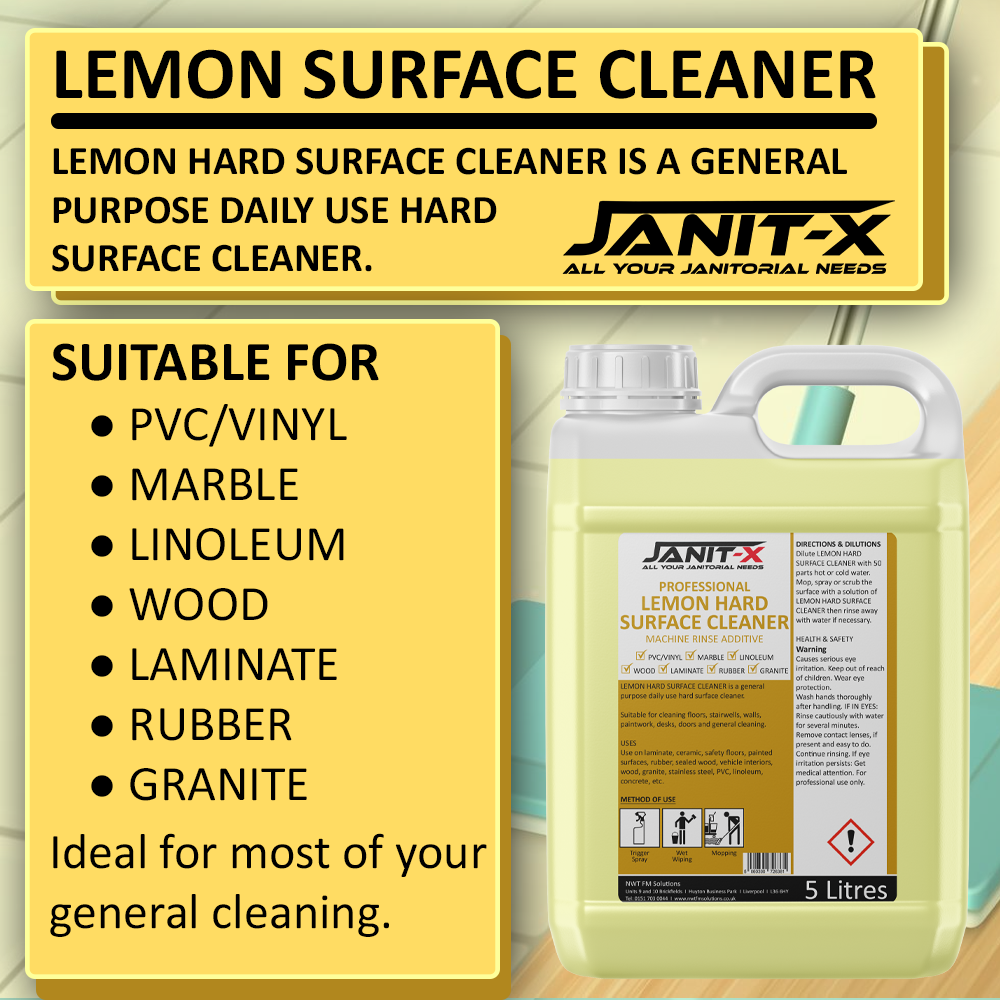
Minimum stock levels for cleaning supplies are the quantities below which you never want to fall, calculated from how fast you use each item and how long your supplier takes to deliver. Get this wrong in either direction and it costs you: too low and you get emergency orders at premium prices, too high and you are storing cash on a shelf. The formula is straightforward. Take your average weekly usage, multiply by your supplier's lead time in weeks, then add a buffer for busy periods. A core consumable makes a good worked example: a five-litre all-purpose cleaner such as Janit X Lemon All Purpose Cleaner 5 Litre is used daily across most sites, so it belongs in the fast-moving tier with a tighter reorder point than a seasonal floor product.
Calculating Par Levels and Reorder Points from Usage History
Par level is the maximum you want to hold; reorder point is the trigger to order. Both come from usage history, not from gut feel. Pull three months of order records and divide total units by the number of weeks. That is your consumption rate. Multiply by lead time for the reorder point, and add your safety stock for the par level.
| Step | Calculation | Example |
|---|---|---|
| Weekly usage | Units used ÷ weeks in period | 12 rolls ÷ 12 weeks = 1 per week |
| Reorder point | Weekly usage × lead time (weeks) | 1 × 2 = 2 rolls |
| Safety stock | Buffer for busy weeks | + 2 rolls |
| Par level | Reorder point + safety stock + order quantity | 2 + 2 + 6 = 10 rolls |
Review the numbers quarterly. Occupancy changes, cleaning regimes change, and last year's par level is rarely this year's.
Stock Counts, Audits and Storage Organisation That Hold Up
Stock counts fail when they are irregular, undocumented, or done by someone who does not know the cupboard. Set a fixed count day, weekly for fast movers and monthly for everything else, and count the same way each time: top shelf to bottom, left to right.

Storage organisation does the heavy lifting here. Durable reusable cloths make counting and issuing simpler because one pack equals a known quantity, which is why many sites standardise on Janit X Large 500 Wash Microfibre Cleaning Cloths 10 Per Pack 40cm X 40cm rather than mixed cloth types.

How Janitorial Inventory Software Changes the Day-to-Day
Janitorial inventory software is a system that can replace a spreadsheet for tracking stock, and it is worth evaluating against your own requirements. A shared count also makes it easier to set sensible storage locations for each site, since ways to store business inventory should support quick access without letting supplies disappear from view.
The trade-off is real: software needs clean data to work, so do not buy it until your checklist and categories are settled. A spreadsheet with a discipline problem will simply become software with a discipline problem.
A common pattern is to start with a single site and a core set of fast-moving consumables. Run the software alongside your spreadsheet for one full count cycle, then compare the two.
When you evaluate systems, ask three questions: can it handle multiple storage locations per site, can it produce a usage variance report by category, and can it export data in a format your accountant can use? The answers matter more than the number of integrations listed on the sales page. For most small to medium operations, a mid-range system with strong mobile scanning and simple reporting beats an enterprise suite that nobody has time to configure.
Janitorial Inventory Management Mistakes That Cost Money
The most expensive janitorial inventory management mistakes are not dramatic. They are small, repeated, and invisible until the invoice arrives. Here are the ones we see most often, with the mechanism behind the cost and the fix that actually works.
- SKU sprawl. Six different surface cleaners, none of them fully used. Every extra SKU adds ordering time, storage space, and training burden. Standardise to one or two per task and your ordering, training, and storage all get simpler. A common pattern is to run a six-month usage report and retire any product that accounts for less than 5% of category spend.
- Ordering to the shelf, not to the usage. Buying because a shelf looks empty rather than because the reorder point was hit leads to overstock on slow movers and stockouts on fast movers. The fix is to post the reorder point on the shelf label and require a count before any order is placed.
- No lead time buffer. Ordering at zero stock and hoping delivery is next day. It rarely is. Build a safety stock equal to at least one week of average usage for critical items, and review supplier lead times quarterly.
- Maverick purchasing. Staff ordering on personal cards or from whoever answers the phone destroys any chance of spend control or consolidated pricing. The fix is a single approved supplier list and a purchase order system, even if it is a shared spreadsheet.
- Ignoring waste. Bin sacks, paper, and gloves are consumed faster than the count suggests when they are stored loosely rather than dispensed. A dispenser that releases one item at a time reduces waste by making over-consumption visible.
Loss prevention and waste reduction both start with the same question: who is accountable for this category? Name one person per site, give them the checklist, and the rest follows. To measure whether your fixes are working, track two simple metrics: stockout rate (the percentage of count cycles where a critical item hits zero) and usage variance (the difference between expected and actual consumption per category).
Chemical Storage, Safety and Compliance in the Supply Room
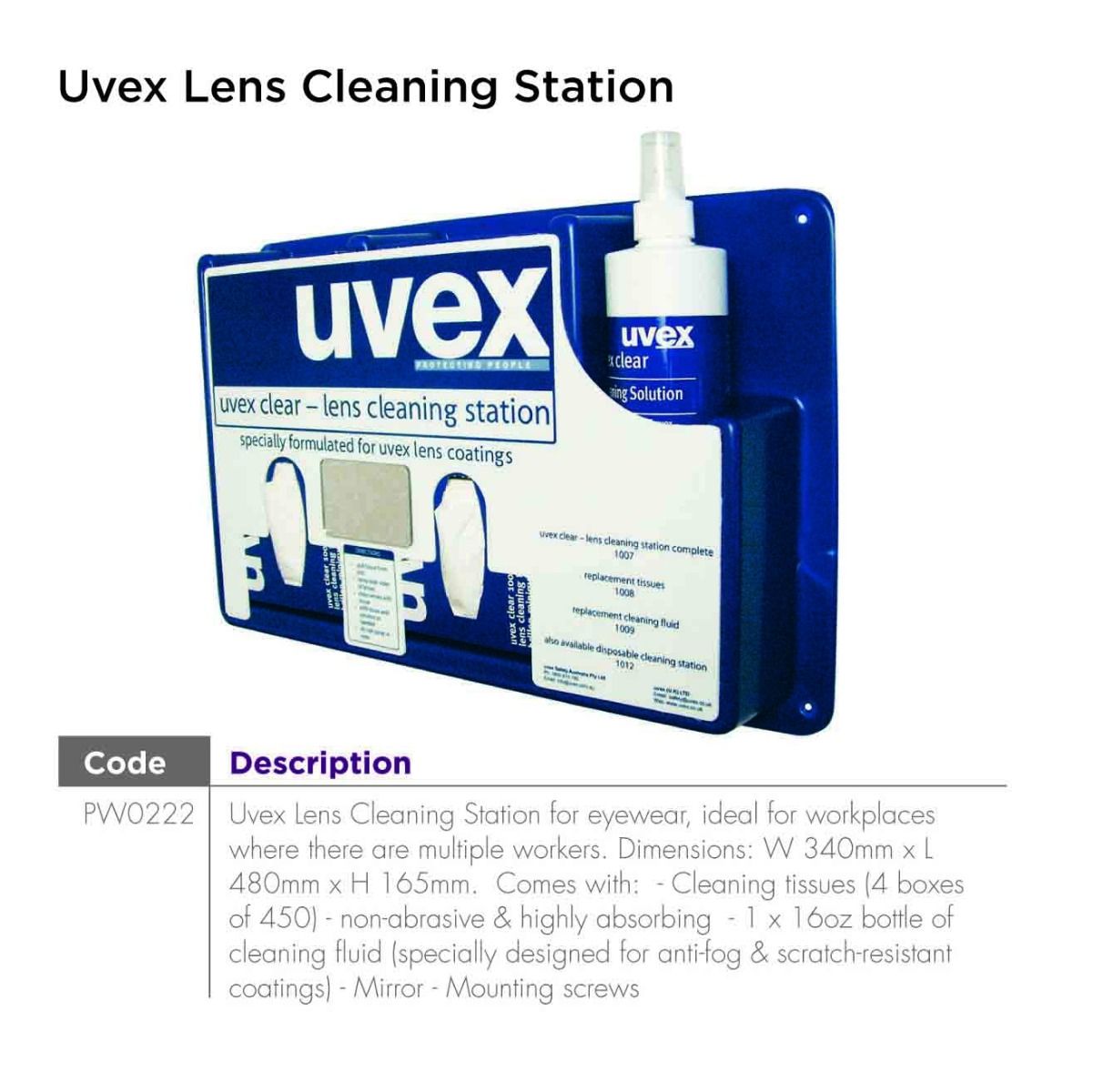
Chemical storage is where inventory management stops being an admin task and becomes a safety obligation. Under the Control of Substances Hazardous to Health Regulations, employers must assess and control the risks from hazardous substances used at work, and that includes how cleaning chemicals are stored, labelled, and dispensed. In practice this means keeping chemicals in a designated, ventilated area, storing them in original labelled containers, never decanting into unmarked bottles, and keeping safety data sheets accessible. A dedicated cleaning station makes compliance easier to demonstrate than a cupboard of loose bottles, which is why a unit such as the Uvex Complete Cleaning Station is worth considering for sites handling concentrated chemicals daily.
Setting Up Your Supply Account with UK Business Supplies
The simplest way to fix inventory management is to reduce the number of suppliers you are managing. UK Business Supplies offers janitorial, stationery, catering, and workwear in one account. If you are ready to start, you can browse a core janitorial line such as UK Business Supplies Ex Brtn241bktwin and add it to your first order.
Running out of bin sacks on a Friday afternoon is not an inventory problem. It is a system problem, and it is fixable. UK Business Supplies gives you one place to order janitorial consumables, stationery, and catering supplies, with credit account options for managing operational spend and online ordering with delivery tracking so you always know what is coming.
Frequently Asked Questions
How often should cleaning supplies be counted?
Count high-use items such as centrefeed rolls, bin sacks and surface cleaner weekly, and run a full inventory audit monthly. Weekly counts catch a fast-moving line before it runs out, while the monthly audit reconciles records against what is actually on the shelf. If you operate multiple sites or share a supply room across shifts, add a short spot check midweek on the two or three lines that disappear fastest.
How do you set minimum stock levels for janitorial supplies?
Work backwards from usage. Track how many units you use in a normal week, multiply by your supplier lead time in weeks, then add a safety buffer of roughly 25%. That figure is your reorder point. For example, if you get through 12 centrefeed rolls a week and delivery takes one week, you reorder at around 15 rolls. Review the numbers each quarter because occupancy and shift patterns change usage.
What should a janitorial inventory checklist include?
A practical checklist covers four groups: consumables such as wiping paper, bin sacks and surface cleaners; equipment such as mops and mop head refills; personal protective equipment including gloves; and safety items such as wet floor signs. For each line, record the SKU, unit size, current quantity, par level and reorder point. Add a column for storage location so anyone covering a shift can find and count items without guessing.
How can inventory software help manage cleaning supplies?
Software replaces the spreadsheet by keeping one central record of stock across sites, flagging lines that hit their reorder point and showing who ordered what. Mobile scanning speeds up stock counts, and usage reports expose lines that are over-ordered or quietly disappearing. The main gain is visibility: instead of discovering a shortage when the last roll runs out, you see the trend weeks earlier and can adjust par levels.
How can businesses reduce waste when buying cleaning products in bulk?
Buy bulk only where usage is steady and storage is suitable. Standardise on fewer SKUs so part-used packs do not pile up, rotate stock so older items are used first, and check dilution and dosing instructions so concentrated products are not over-applied. Reviewing usage history before each bulk order stops the common pattern of overstocking slow-moving lines while fast movers still run short.
