

Last Updated: November 4, 2026
Quick Summary
Bulk catering supplies are worth it for small offices when you buy the items your team uses every day, such as tea, coffee, sugar and milk, in catering packs instead of retail boxes. The benefit is fewer ordering cycles, less chance of running dry mid-week and a predictable monthly spend you can budget for.
- A team of eight buying single supermarket packs pays well over the odds compared with a catering pack that lasts months.
- The Clipper FOODSERVICE Fairtrade Blend 1 Cup Teabags pack of 1120 costs £19.99 and is plastic free and biodegradable.
- Nescafe Gold Blend Freeze Dried Instant Coffee 500g at £22.99 makes roughly 277 cups per tin.
- Decant bulk stock into smaller sealed containers, set a par level for each item and keep heavy items low.
- Place a one-off first order to test quality, then set a subscription on the items you burn through fastest.
Table of Contents
- Why Bulk Catering Supplies Make Sense for Small Offices
- Building Your Office Kitchen Inventory Checklist
- Wholesale Office Kitchen Essentials: Tea, Coffee and the Daily Brew
- Eco-Friendly Catering Disposables for Offices
- Small Office Storage Optimisation for Bulk Deliveries
- Budgeting for Office Catering and Comparing Subscription vs One-Off Ordering
- Setting Up a Trade Account for Bulk Catering Supplies
- Frequently Asked Questions
Why Bulk Catering Supplies Make Sense for Small Offices
Bulk catering supplies for small offices rarely get the attention they deserve, yet the maths is hard to argue with. A team of eight buying single packs from a supermarket pays well over the odds for teabags, milk and sugar compared with a catering pack that lasts months. This guide breaks down what's worth buying in bulk, what isn't, and how to store it all without turning the kitchen into a stockroom.
The real benefit isn't just the unit price. It's fewer ordering cycles, less chance of running dry mid-week, and a predictable monthly spend you can actually budget for. Bulk catering supplies work best when you buy the items your team uses every single day, not the ones that sit forgotten at the back of a cupboard.
Below, we'll show you exactly which categories to prioritise, how to store bulk deliveries in a small space, and how to decide between subscription and one-off ordering. But first, here's what most guides get wrong: they assume bulk buying means a huge minimum order. It doesn't. It means buying the right pack size for your headcount.
Building Your Office Kitchen Inventory Checklist
An office kitchen inventory checklist is a simple list of every consumable your team uses in the kitchen, split by how often it needs replacing. Get this right and ordering becomes a five-minute job instead of a guessing game.
Start with three tiers:
- Daily essentials: teabags, coffee, milk, sugar, washing-up liquid, paper towels
- Weekly consumables: bin liners, surface cleaner, vinyl gloves, disposable cups
- Monthly or seasonal: first aid restock, bulk snack supplies, seasonal disposables
Walk the kitchen once with a notepad and count what's actually there. For the wider workplace picture, our rundown of the 7 best office janitorial supply companies for UK workplaces covers the categories worth including beyond the kitchen.
Wholesale Office Kitchen Essentials: Tea, Coffee and the Daily Brew
Wholesale office kitchen essentials come down to four things: tea, coffee, sugar and milk. These are the items your team touches every working day, so it pays to buy them in catering packs rather than retail boxes.
For tea, the Clipper FOODSERVICE Fairtrade Blend 1 Cup Teabags (Pack of 1120) at £19.99 is our pick for most small offices. The bags are unbleached, plastic free and biodegradable, and the pack is foil-sealed for freshness. If your team prefers a stronger cup, the Birchall Premium Fairtrade English Breakfast Tea 1100's at £26.99 is a full-flavoured blend. The PG Tips One Cup Catering Teabags 1100s at £21.99 suit anyone after a familiar, smooth everyday tea.

For coffee, the Nescafe Gold Blend Freeze Dried Instant Coffee 500g at £22.99 makes roughly 277 cups per tin and has a click-to-close lid that keeps the flavour in. Add Tate & Lyle Fairtrade White Sugar Sachets (Pack of 1000) at £9.99 and Lakeland Semi-Skimmed Milk Pots (Pack of 120) at £6.49, which carry a minimum eight weeks' shelf life. That's a full hot drinks station for under £60.
Here are the everyday hot drinks essentials the article prices for a small office.
| Item | Price | Note |
|---|---|---|
| Clipper FOODSERVICE Fairtrade Blend 1 Cup Teabags | £19.99 | Unbleached, plastic free and biodegradable |
| Birchall Premium Fairtrade English Breakfast Tea | £26.99 | Full-flavoured blend for a stronger cup |
| PG Tips One Cup Catering Teabags | £21.99 | Familiar, smooth everyday tea |
| Nescafe Gold Blend Freeze Dried Instant Coffee | £22.99 | Roughly 277 cups per tin |
| Tate & Lyle Fairtrade White Sugar Sachets | £9.99 | Daily essential for the hot drinks station |
| Lakeland Semi-Skimmed Milk Pots | £6.49 | Minimum eight weeks' shelf life |
Eco-Friendly Catering Disposables for Offices
Eco-friendly catering disposables for offices are single-use cups, stirrers, napkins and food containers chosen for recyclable, compostable or recycled-content materials rather than virgin plastic. The swap matters most in offices that host regular meetings and client visits, where disposable cups disappear fastest.
BioPak 12oz Single Wall Hot Cups (Pack of 50) use a water-based lining that can go in standard paper recycling where your council accepts it.
Watch out: "biodegradable" only means anything if the item reaches the right waste stream. A compostable cup binned with general waste delivers none of the benefit and may contaminate a recycling load. Check your local council's commercial waste rules before you commit to a large order, and confirm whether your waste contractor offers a separate food-waste or compostable stream.
This is where most guides stop, but small offices can go further by tracking the impact. Keep a simple monthly log of cases of disposables bought, cases of recyclable or compostable stock as a share of the total, and the weight of general waste collected. Pair disposables with a clearly labelled recycling point and a short note above the bin explaining what goes where, because contamination is the main reason office recycling loads are rejected.
Small Office Storage Optimisation for Bulk Deliveries
Small office storage optimisation is the practice of fitting bulk deliveries into limited kitchen space using stackable, labelled containers and a strict par-level system. A catering pack of 1,120 teabags is only a bargain if you can store it without it going stale.
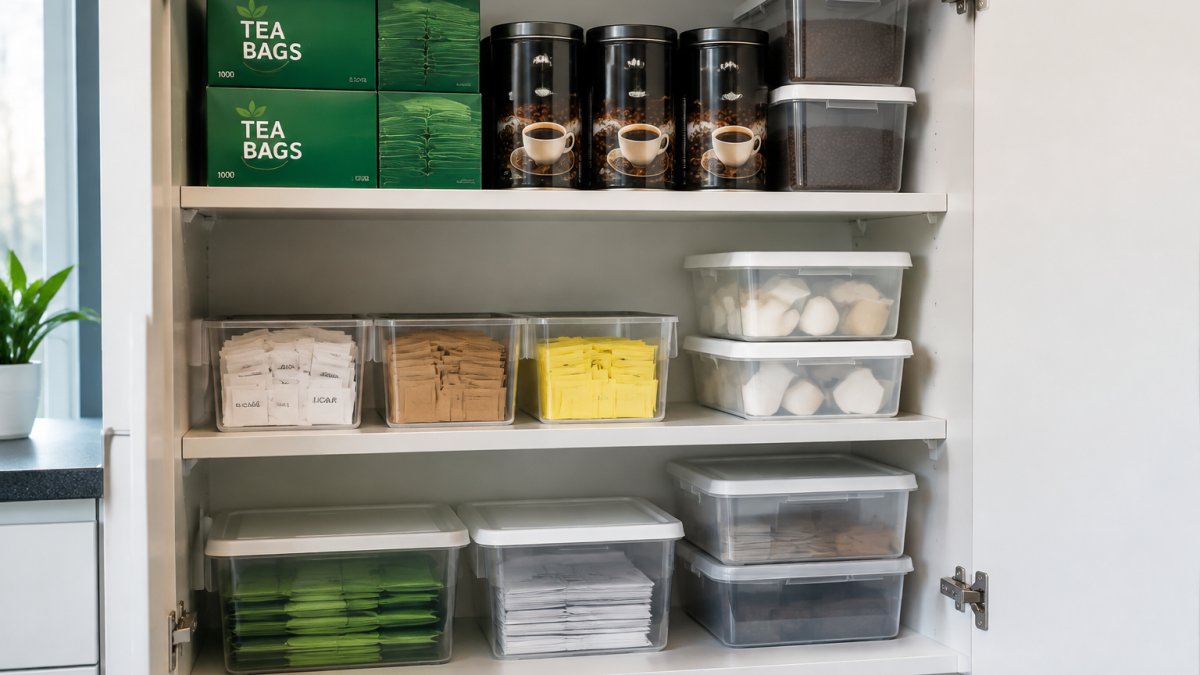
Three rules keep bulk stock manageable:
Clipper FOODSERVICE Fairtrade Blend 1 Cup Teabags (Pack of 1120) →
- Decant into smaller sealed containers and keep the bulk pack in a cool, dry cupboard
- Set a par level for each item (for example, reorder tea when two boxes remain)
- Keep heavy items low and use a Small Catering Utility Cart to move deliveries from reception to the kitchen in one trip
The mistake we see most often is storing bulk stock in the same cupboard as daily-use items. Split them: one shelf for what's open, one for reserves.

Budgeting for Office Catering and Comparing Subscription vs One-Off Ordering
Budgeting for office catering starts with knowing your monthly consumption per head. Count cups per person per day, multiply by working days, and you have your baseline. Everything else is pack-size maths.
Subscription ordering suits offices with steady, predictable consumption: you set a repeat schedule and the tea, coffee and cleaning supplies arrive without anyone remembering to order. One-off ordering suits smaller or fluctuating teams, or offices that want to compare trade prices before committing. A sensible middle path is a one-off first order to test quality, then a subscription on the items you burn through fastest.
For a deeper look at controlling spend across categories, our guide on how you can track office supply spend effectively covers the reporting side.
Setting Up a Trade Account for Bulk Catering Supplies
Setting up a trade account is the step that turns occasional bulk buying into a proper procurement routine. A trade account gives you one supplier, one invoice and credit terms instead of three separate logins and three payment dates.
Here's how we'd approach it:
- List your top ten consumables and current pack sizes
- Check trade prices against what you pay now, per unit not per pack
- Confirm delivery lead times for essentials like cleaning supplies and milk
- Ask about credit terms and spending visibility across categories
- Place a trial order before committing the whole kitchen budget
On pricing, ask for the trade price per unit and the pack size it applies to, because a lower case price can still be worse value if the case is smaller.
On credit, a trade account lets you spread the cost of orders. Nominate one person to approve orders and reconcile the monthly statement, otherwise credit terms simply delay the moment you discover you have been over-ordering.
Watch out: consolidating to one supplier can leave you exposed if that supplier has a stock-out on a daily essential. Keep a named backup for tea, coffee and cleaning chemicals, and confirm delivery lead times before relying on them.
This is also the point to decide between subscription and one-off ordering. Subscription suits offices with steady, predictable consumption: you set a repeat schedule and the tea, coffee and cleaning supplies arrive without anyone remembering to order. One-off ordering suits smaller or fluctuating teams, or offices that want to compare trade prices before committing. A sensible middle path is a one-off first order to test quality, then a subscription on the items you burn through fastest, keeping ad-hoc buying for seasonal disposables and snacks.
Consolidating to one supplier can save a small office time. UK Business Supplies carries catering, janitorial and office goods in one place, with credit account options and online ordering. For a deeper look at controlling spend across categories, our guide on how you can track office supply spend effectively covers the reporting side.
Frequently Asked Questions
What are the essential catering supplies for a small office?
A small office needs hot drinks first: teabags, instant coffee, sugar sachets and milk pots. Add a stock of disposables such as cups and stirrers, plus cleaning products for the kitchen surface. Use an office kitchen inventory checklist to track what runs out and when. Buying wholesale office kitchen essentials in bulk, such as a 1,120-pack of teabags or a 500g coffee tin, keeps the kitchen stocked without weekly top-up trips.
Is it cheaper to buy office kitchen supplies in bulk?
Usually yes. Larger pack sizes lower the cost per cup and reduce the number of orders you place. For example, a 500g tin of Nescafe Gold Blend makes around 277 cups, while a 1,000-pack of sugar sachets lasts months in a small team. The saving comes from fewer deliveries and less admin time as much as the unit price. Compare the price per portion, not the pack price, before you commit.
Do I need a trade account to buy wholesale catering supplies?
Not always, but a trade or credit account helps. It lets you order regularly without paying upfront each time and keeps spending in one place, which makes budgeting for office catering easier. Ask about credit terms, delivery lead times and whether prices stay fixed once you order regularly. A single supplier account also gives you visibility over who is ordering what, which cuts down on ad-hoc purchases.
What are the best eco-friendly catering disposables for offices?
Look for unbleached, plastic-free and biodegradable options. Clipper teabags, for instance, use unbleached bags made from plant cellulose and PLA, and PG Tips catering bags are plant-based and biodegradable. For disposables, prioritise recyclable or compostable cups, wooden stirrers and paper napkins. Check that the packaging can go in your office recycling stream, and note that foil inner bags on tea cartons usually need separate disposal.
How do I store bulk catering supplies in a small office space?
Keep bulk stock in a closed cupboard away from heat and damp, and decant only what you need for the week into smaller containers on the kitchen counter. Tea and coffee stay fresher in foil-packed or click-to-close tins. Use stackable boxes and label shelves by category. Rotate stock so older packs are used first, and avoid over-ordering perishables like milk pots, which carry a minimum eight-week shelf life.
The challenge for most small offices isn't finding bulk catering supplies, it's building a routine that keeps the kitchen stocked without overbuying. UK Business Supplies brings catering, janitorial and office essentials into one account, with credit terms to manage cash flow and order tracking for every delivery. Get started with UK Business Supplies and put your office kitchen on a predictable, cost-effective footing.
